AI skin analysis
Dermiva
Skin analysis that keeps the camera shut until you say otherwise.
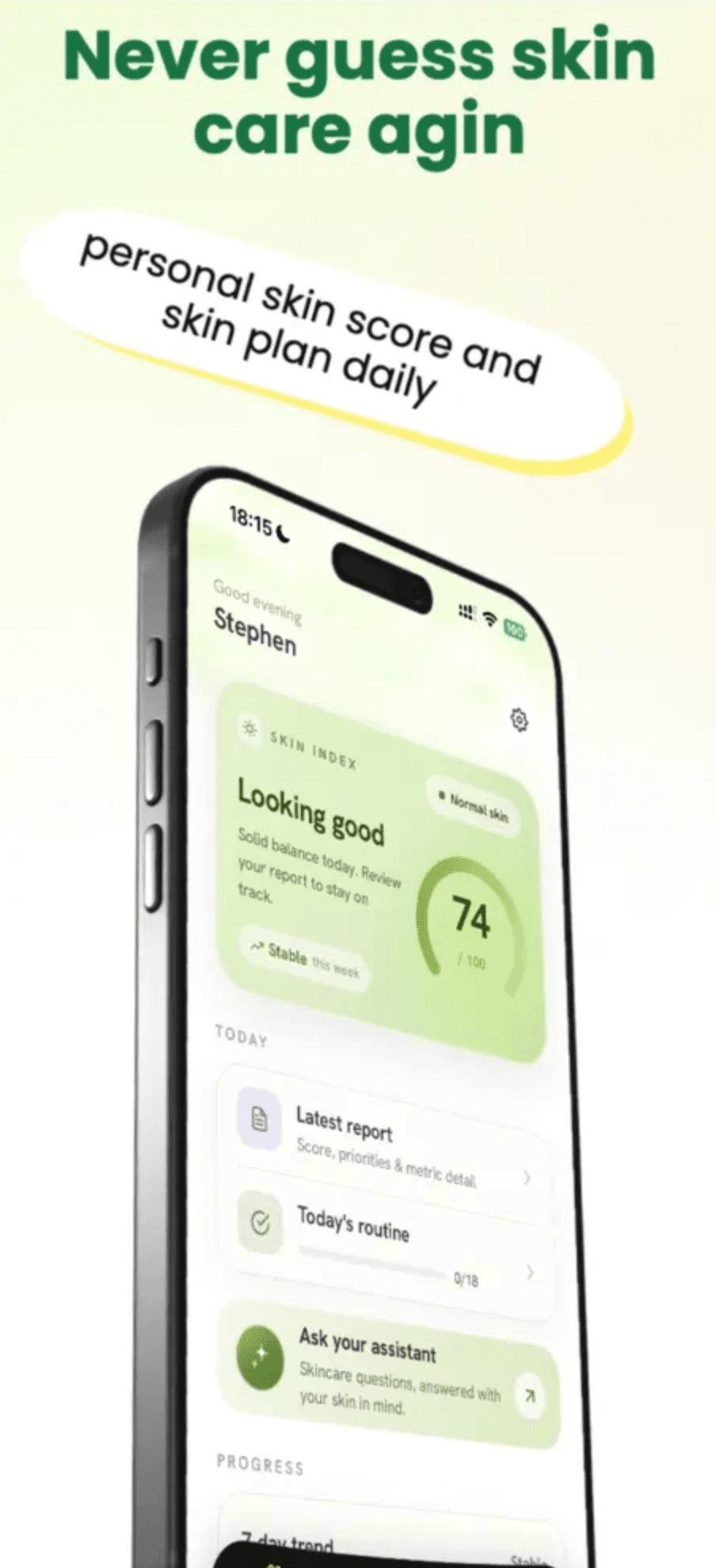
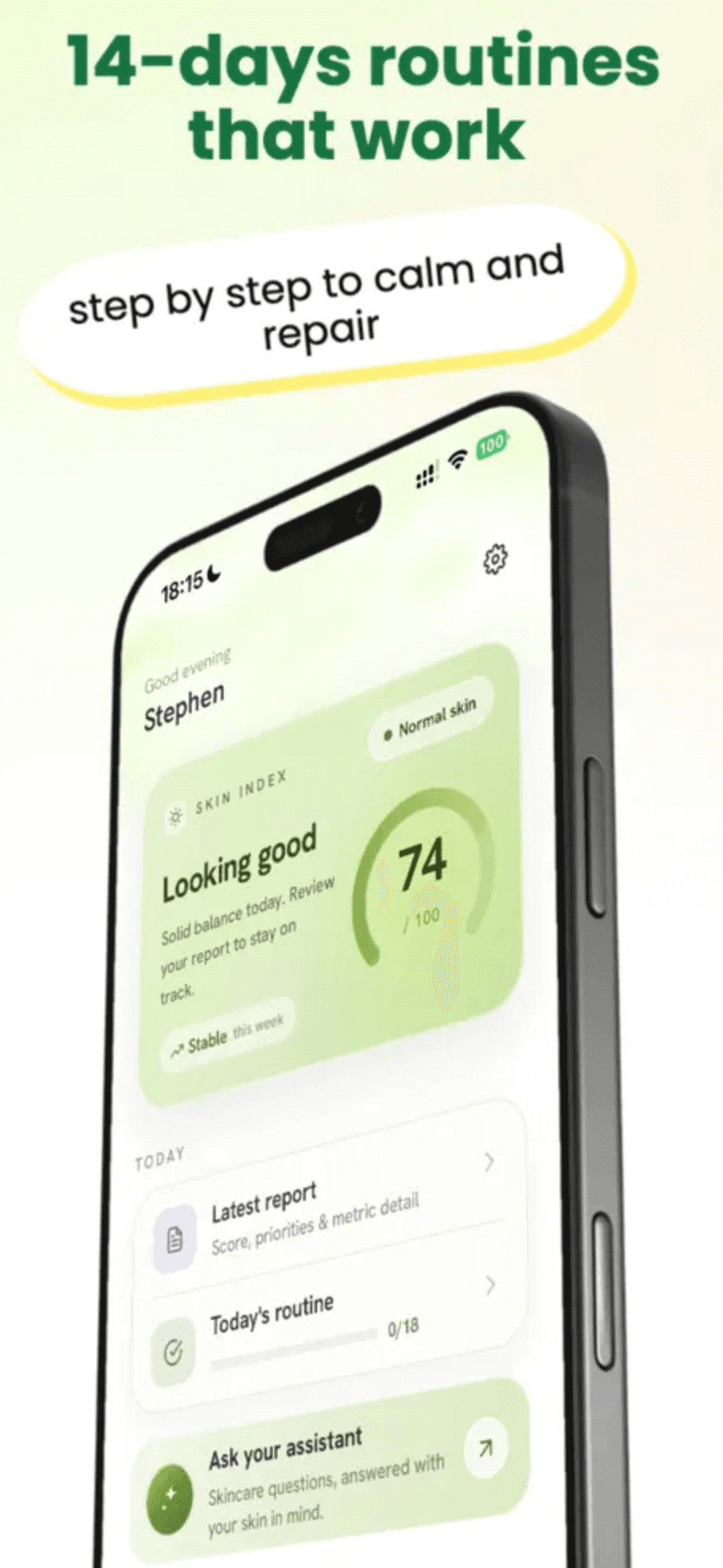
Dermiva reads eight signals from a ten-second face scan and builds a morning and evening routine that changes as your skin does.
- Status
- Live on the App Store
- Platform
- iOS, with Android in development
- Pricing
- Free trial, then weekly, three-month, or yearly plans
- Voice
- “Your face. Your call.”
App Store screens
The problem
Skincare advice is abundant and almost entirely untethered from the individual receiving it. People buy products because of a video, use them inconsistently, cannot tell whether anything is working, and buy more. The missing piece is not information. It is measurement — some record of what your skin was doing before and after, specific enough to act on.
What we built
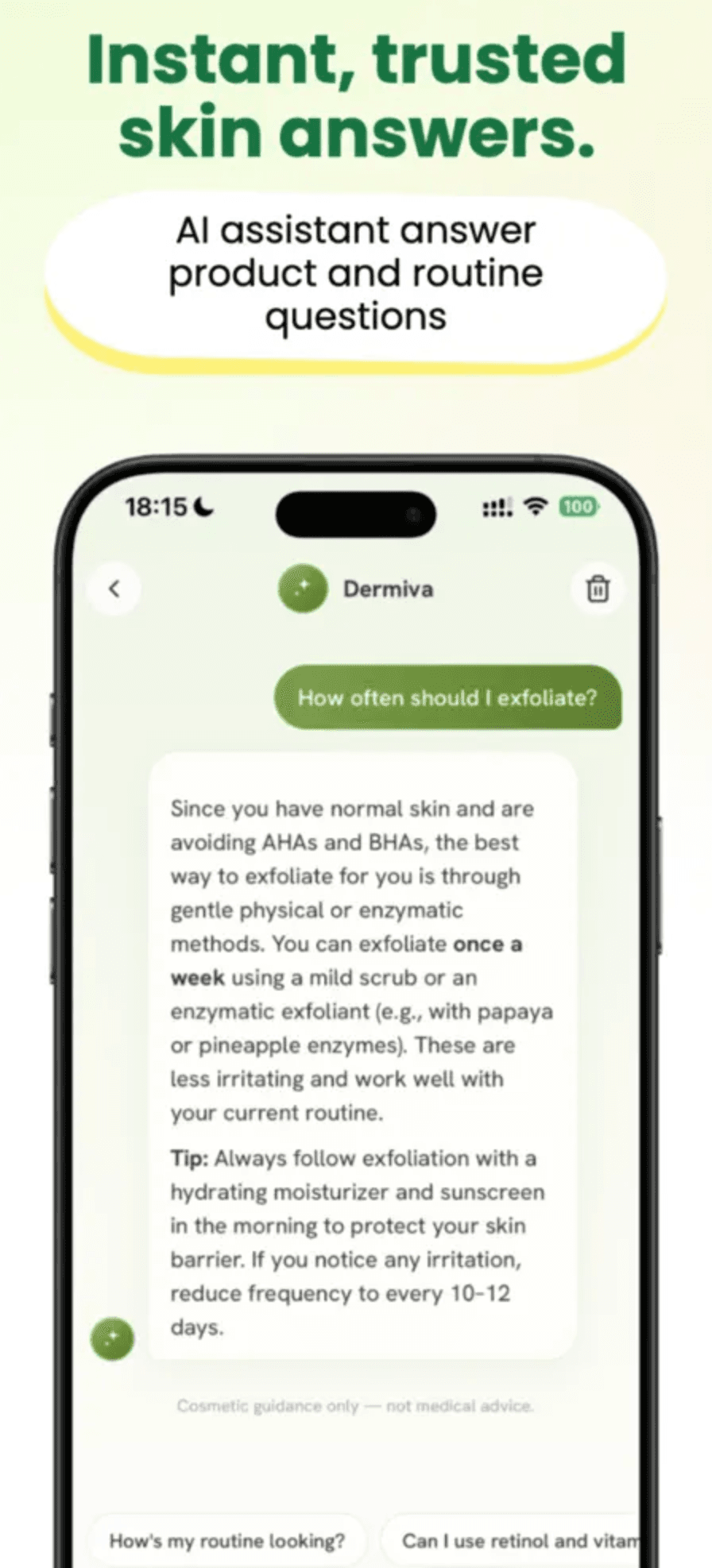
A scan takes ten seconds and returns eight signals: oil, pores, redness, texture, acne, spots, eye area, and fine lines. Those feed a routine that adapts as later scans come in, with a weekly trend view so change is visible over months rather than guessed at in a mirror. An assistant is there for the questions a results screen cannot anticipate.
Inside the product
The decisions that mattered.
Eight-signal analysis
Oil, pores, redness, texture, acne, spots, eye area, and fine lines — specific enough that a routine can respond to them individually.
Adaptive AM and PM routines
Routines change with the scans. A recommendation that never updates is a guess with better formatting.
Weekly trends
Skin changes on a scale of weeks. The tracking is built to that rhythm rather than to a daily engagement loop.
Consent-led camera
The camera opens when the user opens it. Not on launch, not in the background, not to improve anything.
Deletable scan history
Any scan can be removed. Deletion means deletion, and it is available without contacting anyone.
On-device reminders
Reminders are stored locally. There is no reason for a routine notification to require a server, so it does not.
What it taught the studio
Lessons that transfer.
Building our own products is how we develop the judgement we bring to everyone else’s.
Consent is an architecture decision
The camera behaviour, local reminder storage, and real deletion are not policy text. They are how the system is built. Once privacy is structural it cannot be quietly reversed by a growth experiment, which is the only kind of privacy guarantee worth making.
Sensitive data changes the whole design
Faces are about as personal as input gets. Working under that constraint taught us to ask what a feature would look like if the data never left the device, and to only give that up when there is no alternative. It is a good question to ask of any system.
Uncertainty has to be shown, not hidden
An analysis that presents a guess as a fact loses the user the first time it is wrong. Communicating confidence honestly is harder than producing the estimate, and it matters more.
Start a conversation
Tell us what you're building.
We read every message. If we're not the right fit, we'll say so — and point you somewhere better if we can.
Contact the dock
One address, read by the people who would do the work. No intake form, no calendar link — just an email.
tphamdn@gmail.com