Focus & habits
Rune
Focus and habits, for people who have tried everything else.
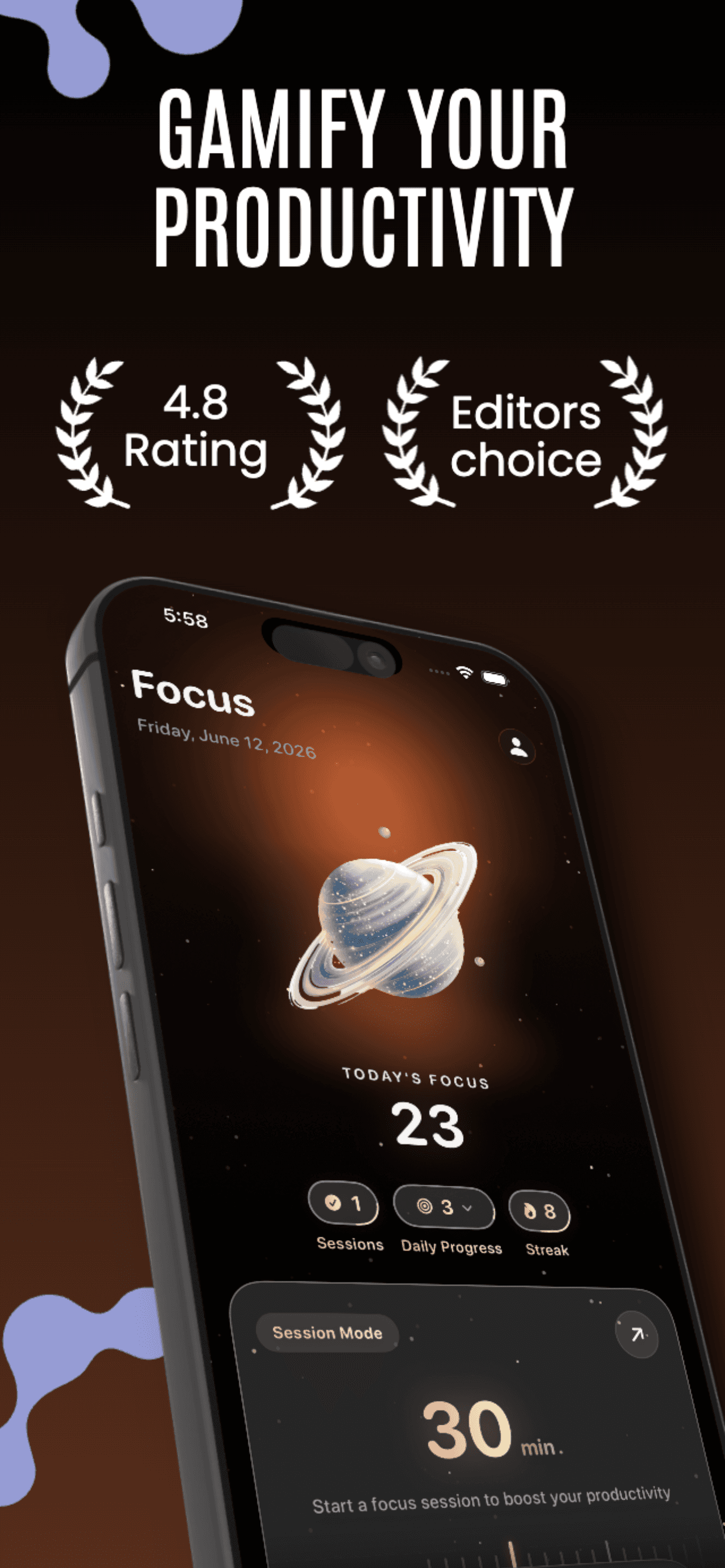
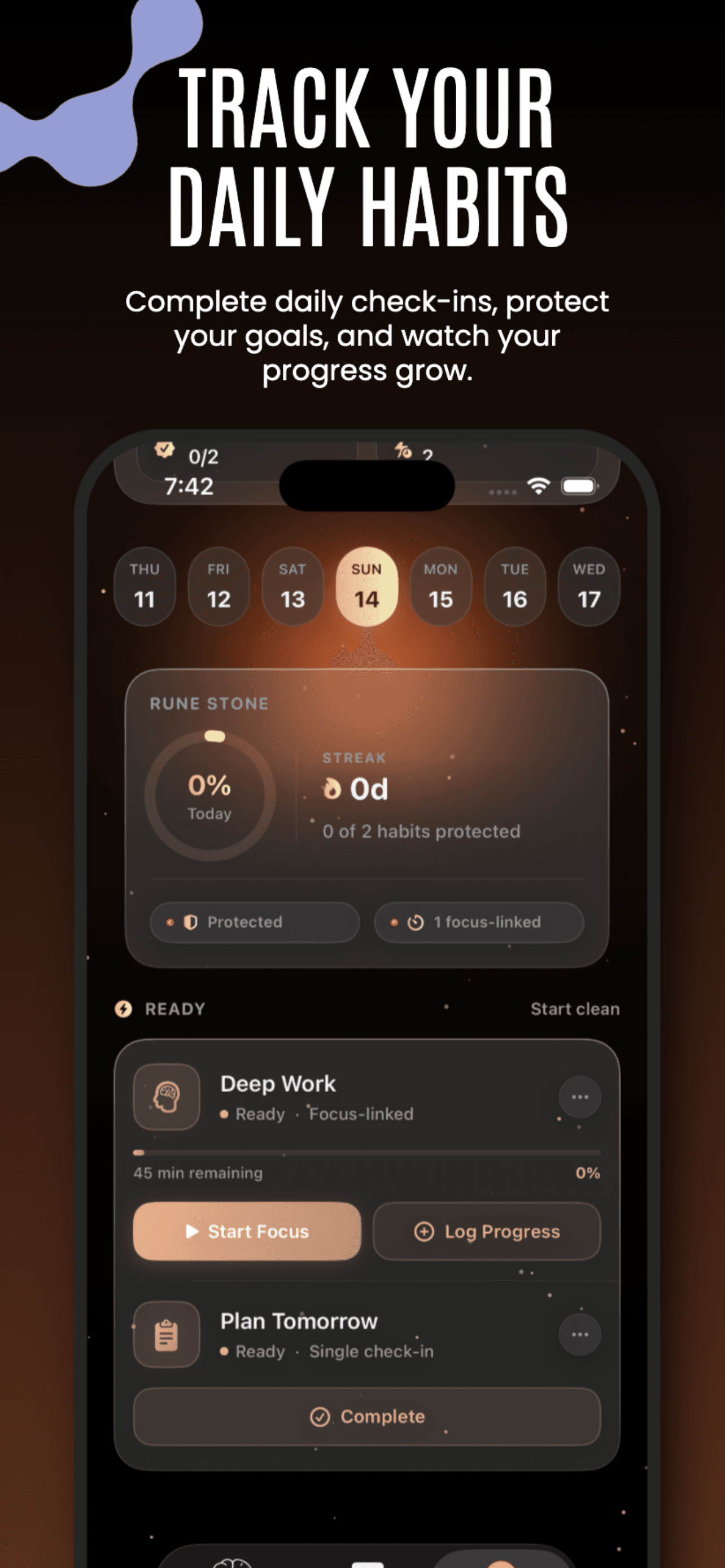
Rune blocks the apps and sites that take your day, for as long as you said they should be blocked. It tracks what you did with the time you got back.
- Status
- Live on the App Store
- Platform
- iOS
- Pricing
- Free, with a $5.99/month premium tier
- Voice
- “Your attention is sacred.”
App Store screens
The problem
Every focus app on the market assumes the user will cooperate with it. That assumption is the reason they fail. The person who installs a focus app at 9am is not the same person who wants to open Instagram at 2pm, and the 2pm version always wins an argument against a gentle reminder. The problem is not motivation. It is that the software is too easy to overrule.
What we built
We built Rune to be difficult to talk out of. A session, once started, is a commitment the app holds on your behalf — strict blocking of apps and websites for the duration, not a nudge you can dismiss. Around that hard centre we put the things that make commitment feel worth repeating: streaks, gems, badges, a focus score, and templates so starting takes one tap instead of a decision.
Inside the product
The decisions that mattered.
Strict blocking
Apps and websites are genuinely unavailable for the length of a session, not hidden behind a confirmation dialog that takes two seconds to clear.
Session templates
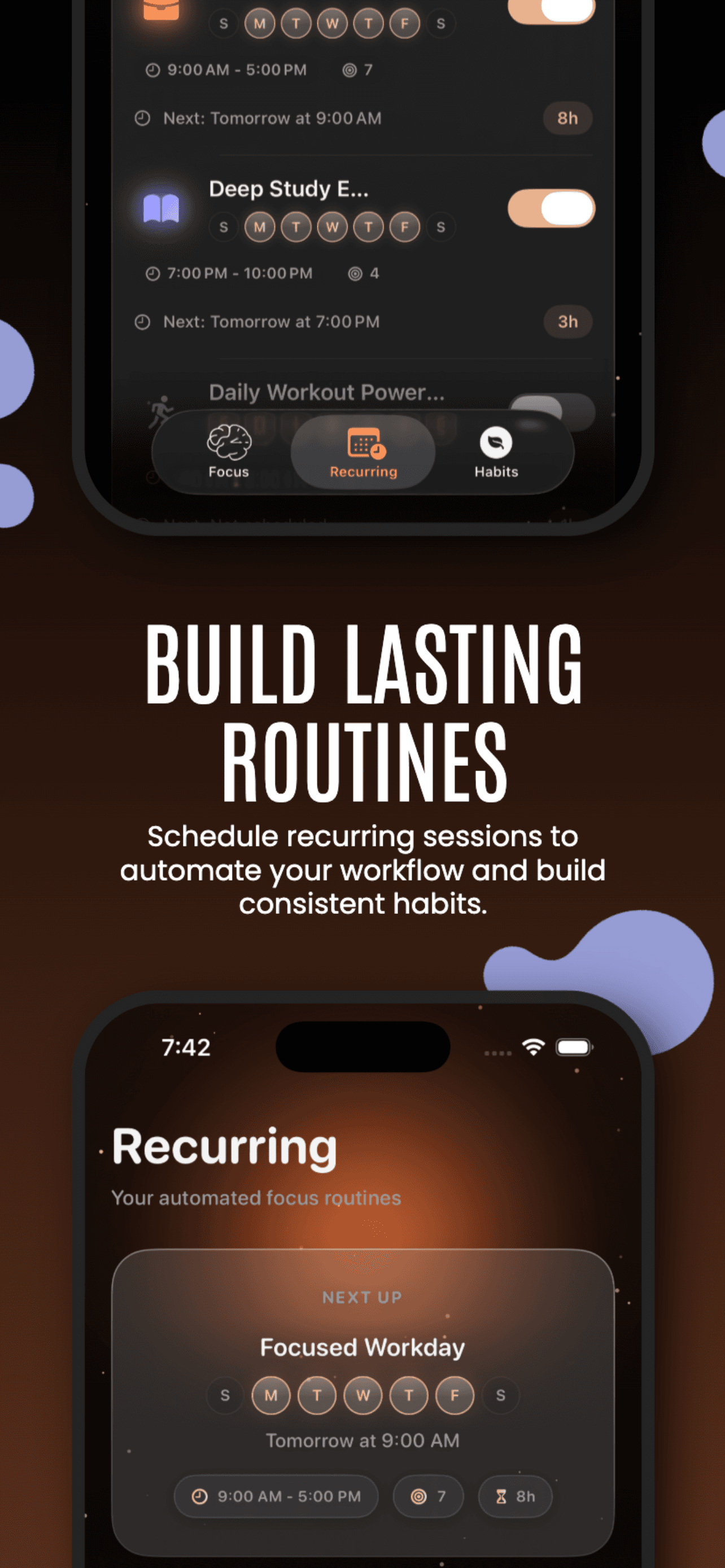
Gym Mode, Social Detox, and Deep Study exist so that starting a session never requires configuring one. The decision to focus and the work of setting up focus should not be the same decision.
Recurring routines
Sessions that start on their own, on a schedule. The most reliable habit is the one you stop having to choose.
Location triggers
Arriving somewhere can start a session. Context does more work than willpower.
Focus score
One number, calculated from real sessions, so progress is legible without a dashboard to interpret.
Soundscapes and custom block screens
What you see and hear when you hit a blocked app matters. A hostile error message makes people uninstall; a calm one makes them go back to work.
What it taught the studio
Lessons that transfer.
Building our own products is how we develop the judgement we bring to everyone else’s.
Constraints are a feature, if you are honest about them
Rune's core value is a refusal. Users chose it because it says no. Business software has the same opportunity and almost never takes it — most internal tools let anyone do anything and then handle the consequences in a training document.
One number beats a dashboard
The focus score does more for retention than any chart. When we build reporting for a client, the first question is which single number the user should be able to read in one second.
Defaults are the product
Almost nobody builds a custom session. Templates are used overwhelmingly. Whatever is configurable will be left on its default setting, so the default has to be the best answer, not the safest one.
Start a conversation
Tell us what you're building.
We read every message. If we're not the right fit, we'll say so — and point you somewhere better if we can.
Contact the dock
One address, read by the people who would do the work. No intake form, no calendar link — just an email.
tphamdn@gmail.com